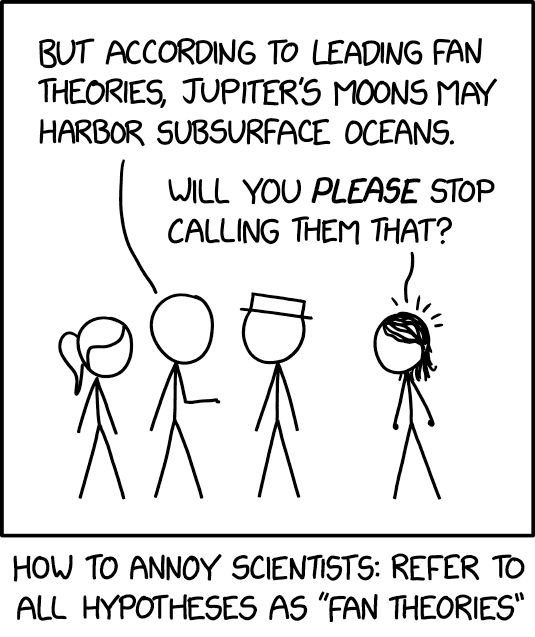
Ever found yourself dissecting a movie scene long after the credits rolled, piecing together seemingly disparate clues, or debating a character’s true motives with friends until the early hours? If so, you’ve experienced the exhilarating world of Fan Theories, Speculation, and Future Potential. This isn't just about idle chatter; it’s a powerful phenomenon where engaged audiences become active participants, reshaping how stories are perceived, discussed, and even created.
In an era of endless content and interconnected communities, fan speculation has evolved from niche forum discussions into a force that can influence blockbuster narratives and even dictate the trajectory of beloved franchises. It's a testament to the human desire to understand, predict, and ultimately, connect with the stories that move us.
At a Glance: What You'll Discover
- Why We Theorize: The psychological drivers behind our urge to find hidden meanings and predict plot twists.
- The Power of Collective Minds: How online communities amplify speculation, turning individual hunches into widespread movements.
- From Fan Idea to Canon: Real-world examples where creator intent and fan interpretation blur, leading to surprising narrative developments.
- The Unseen Influence: How showrunners and writers observe fan conversations, sometimes subtly steering their plots.
- The Double-Edged Sword: The benefits of engagement versus the pitfalls of creative compromise or unintended spoilers.
- The Future of Storytelling: A glimpse into how evolving fan dynamics might usher in a new era of collaborative narratives.
The Irresistible Pull of the Unseen: Why We Speculate
At its heart, speculation is deeply human. Our brains are wired to find patterns, solve puzzles, and anticipate outcomes. When applied to fiction, this translates into an insatiable drive to understand the "why" and the "what next." Fan theories aren't just guesses; they're acts of critical engagement, born from careful observation and a deep emotional investment in fictional worlds.
As noted by fiveable.me, fan theories significantly "enhance engagement by encouraging critical thinking and clue-finding." This critical lens transforms passive viewing into an active quest. You're not just watching; you're detective, psychologist, and future forecaster all rolled into one. The narrative becomes a living, breathing entity, constantly open to new interpretations and possibilities.
Moreover, speculation is a social act. Sharing a theory, debating its merits, or rallying behind a popular hypothesis fosters powerful communities. Online forums, social media, and dedicated fan sites become digital water coolers where shared passion ignites vibrant discussions. This communal aspect amplifies the buzz around a show, creating a feedback loop that attracts even more viewers and deepens existing loyalties.
From Peter Pan to Paw Patrol: The Creative Spectrum of Fan Theories
The sheer diversity of fan theories is staggering, spanning every genre and medium. They range from the darkly comedic to the deeply philosophical, offering fresh lenses through which to view familiar tales. BoredPanda.com has compiled a fascinating array of "underrated fan theories" that demonstrate this breadth. Let's delve into a few that highlight different facets of the speculative impulse:
Reinterpreting Character Motivations and Backstories
Sometimes, a fan theory can completely upend our understanding of a character, painting a darker or more complex portrait.
- Peter Pan's Dark Secret: One theory suggests Peter Pan eliminates Lost Boys who dare to grow up, and Captain Hook and his pirates are actually escaped Lost Boys, forever haunted by their brush with Neverland's eternal childhood. This re-contextualizes the classic rivalry, adding a layer of tragic desperation.
- Dumbledore, the Master Manipulator: In the Harry Potter universe, a popular theory posits that Albus Dumbledore was far from a benevolent mentor, intentionally leaving Harry in an abusive household to ensure his malleability and ultimate sacrifice. It's a chilling re-evaluation that, for some, adds depth to his complex character.
- Kevin Malone's Secret Life: The seemingly simple-minded Kevin from The Office (US) is theorized to be involved in a money laundering scheme, feigning stupidity as a brilliant cover. This transforms a beloved comedic relief into a criminal mastermind, turning every one of his on-screen blunders into a subtle act of misdirection.
Unveiling Hidden Worlds and Dystopian Realities
Other theories seek to explain fundamental aspects of a fictional world, often revealing a darker or more intricate truth beneath the surface.
- Bikini Bottom's Nuclear Past: The whimsical world of SpongeBob SquarePants might be rooted in tragedy. Given the real-world Bikini Atoll's history as a nuclear test site, the theory that Bikini Bottom is a post-apocalyptic mutated ecosystem, explaining the eccentric creatures and frequent mushroom cloud formations, is unsettlingly plausible.
- The Layered Matrix: Beyond the red pill/blue pill choice, some theorize that the "real world" in The Matrix is merely another, more convincing layer of control designed to pacify non-conformists. This suggests an even deeper level of enslavement and makes Neo's rebellion exponentially more challenging.
- Jetsons and Flintstones: A Divided Future: A fascinating theory posits that The Jetsons and The Flintstones exist simultaneously in a dystopian future. The "haves" live above the clouds in the futuristic Jetson world, while the "have-nots" toil on a ravaged Earth, explaining the Stone Age technology as a survival adaptation. The Great Gazoo appearing in both shows, though a continuity oddity, lends a touch of cosmic oversight to this stark vision.
Filling Narrative Gaps and Explaining Anomalies
Sometimes, fans step in to provide answers where the narrative leaves gaps or presents seeming inconsistencies.
- Scooby Snacks: More Than Just Dog Treats: The classic Scooby-Doo theory that Scooby Snacks are edibles, and Shaggy and Scooby are perpetually high, offers a simple, albeit raunchy, explanation for their often-paranoid and hunger-driven antics.
- Ditto, the Failed Mew Clones: In Pokémon, the striking similarities between Ditto and Mew (shared colors, height, weight, and the Transform ability) lead to the theory that Ditto are failed genetic experiments to clone Mew. This provides a compelling in-universe origin for the quirky Pokémon.
- R2-D2's Selective Memory: A poignant Star Wars theory suggests R2-D2's memory was never fully erased after the prequels, and he feigns ignorance of Obi-Wan and Anakin to protect Luke. This imbues the loyal droid with a profound, unspoken emotional burden. It also raises questions about deeper canonical elements, much like how fans meticulously analyze Everything about Infinity Ultron in the MCU to understand its implications for established lore.
- Caillou's Condition: The often-frustrating behavior of the titular character in Caillou is theorized to be tolerated by his parents because he's a cancer patient. This transforms a simple children's show into a poignant tale of a family coping with serious illness, offering a sympathetic lens to his outbursts.
These examples, from the wildly speculative to the surprisingly logical, showcase the boundless creativity of fandom. They enrich our experience of fiction, proving that stories, once released, take on a life of their own in the collective imagination.
The Feedback Loop: When Creators Listen (and Sometimes Act)
The relationship between creators and fan theories is a complex dance. On one hand, writers and directors often intentionally embed "ambiguous plot points or red herrings to provoke speculation," as fiveable.me points out. It's a way to deepen engagement and encourage repeat viewings. On the other, the sheer volume and insightful nature of fan theories can become a powerful, sometimes overwhelming, force.
Monitoring the Pulse: Audience Insights
Creators frequently monitor fan discussions on social media, forums, and fan wikis. This isn't just curiosity; it's market research. They can gauge audience reactions, understand what resonates, and identify popular interpretations. This data can be invaluable for future storytelling potential, helping creators refine character arcs, develop new plot threads, or even avoid common narrative pitfalls. If a significant portion of the audience is invested in a particular theory, it provides a clear signal of what they find compelling.
Incorporating Fan-Speculated Elements
Sometimes, a theory gains such traction or offers such a compelling solution that it influences the official narrative. While creators rarely admit to directly adopting fan theories wholesale (to protect their creative autonomy), the inspiration can be undeniable. A popular theory might "become validated within the show's canon, blurring creator intent and fan interpretation," according to fiveable.me. This can range from subtle nods to explicit confirmations, creating a sense of shared ownership over the story.
Consider the early days of Game of Thrones, where the "R+L=J" theory regarding Jon Snow's parentage was widely speculated long before its on-screen confirmation. While the showrunners had the plot planned, the robust fan discussion undoubtedly underscored its narrative power and anticipation.
The Pitfalls of Over-Listening
However, this feedback loop isn't without its dangers. Over-reliance on fan theories can lead to:
- Creative Stifling: If creators feel pressured to validate popular theories or cater to vocal minorities, it can constrain their creative vision and lead to predictable, fan-service-driven narratives rather than innovative storytelling.
- Spoiling Surprises: When fans correctly predict major plot twists, it can diminish the impact of reveals for the wider audience, robbing them of genuine surprise.
- Demanding Fan Service: An expectation that creators must fulfill fan desires can breed entitlement and toxicity, making it difficult for writers to take risks or explore unconventional paths.
The ideal scenario is a balanced approach: creators listening and appreciating engagement, but ultimately trusting their own artistic vision to deliver fresh, authentic stories.
The Future Potential: Collaborative Narratives and Beyond
The landscape of Fan Theories, Speculation, and Future Potential is constantly evolving, driven by technological advancements and shifting audience expectations. We're moving beyond simple consumption to active participation, hinting at a future where the line between creator and audience blurs even further.
Interactive Storytelling and Multiverses
With the rise of interactive media, video games with branching narratives, and expansive cinematic universes, the opportunities for fan speculation are exploding. The sheer complexity of multiversal narratives, for instance, encourages deep dives into alternate timelines and character variants, where every choice and every subtle difference fuels new theories.
Web3 and the Decentralization of Fandom
Emerging technologies like Web3 and NFTs could revolutionize how fans interact with intellectual property. Imagine a future where fans could own pieces of a narrative, vote on story directions, or even contribute directly to canon through officially sanctioned, decentralized platforms. This isn't just about passive speculation; it's about active, perhaps even compensated, co-creation. This opens up entirely new models for how creators might engage with their most ardent supporters.
AI and Predictive Storytelling
Artificial intelligence might also play a role. AI models could analyze millions of fan theories to identify common themes, popular character pairings, or untapped narrative avenues, providing creators with predictive insights into what audiences might find compelling. While still in its infancy for creative writing, the potential for AI to inform—not dictate—storytelling is intriguing.
Engaging with Purpose: Best Practices for Fans and Creators
For this vibrant ecosystem to thrive, both fans and creators have a role to play in fostering respectful and productive engagement.
For Fans:
- Embrace the Fun, Respect the Art: Enjoy the process of theorizing, but remember that the ultimate story belongs to the creators. Treat theories as a fun way to engage, not demands.
- Be a Critical Thinker: Don't just accept popular theories. Examine the evidence, look for counter-arguments, and form your own interpretations.
- Mind the Spoilers: When discussing highly speculative theories, especially those that could predict major plot points, be considerate with spoiler warnings.
- Support Creators: The best way to encourage great storytelling is to support the creators through official channels, whether it's subscriptions, merchandise, or simply spreading positive word-of-mouth.
For Creators:
- Maintain Your Vision: While audience feedback is valuable, protect your creative integrity. Don't let vocal fan groups derail your planned narrative or force you into fan service.
- Engage Thoughtfully: Interact with your audience, but be mindful of how much information you reveal. Ambiguity can be a powerful tool for engagement.
- Acknowledge and Appreciate: A simple nod or appreciation for fan creativity can go a long way in building goodwill and fostering a positive community.
- Learn and Adapt: Use fan discussions as a barometer for audience understanding and sentiment. If a significant number of fans are misinterpreting a plot point, it might indicate a need for clearer storytelling in the future.
The Unending Conversation
The world of fan theories and speculation is more than just a pastime; it's a dynamic force shaping the relationship between stories and their audiences. It’s a testament to the enduring power of narrative, demonstrating how deeply we connect with fictional worlds and how eagerly we seek to unravel their mysteries. As technology advances and storytelling formats evolve, the potential for this symbiotic relationship to grow even richer and more collaborative is immense. The conversation, it seems, is only just beginning.